lunes, 7 de noviembre de 2011

Academic Paper Authorship

The academic world has lots of dark nooks and crannies not usually seen by the general public. One of them is the order in which authors are listed on a publication. If you have six people from two or three laboratories collaborating on an important paper, who will be the "senior author." And what does senior author mean? And how do you find the senior author on the list of names attached to the paper? It turns out that different disciplines have different conventions.

Authorship practice varies by field, making interdisciplinary collaborations and the subsequent author lists more complicated. In physics papers, senior and corresponding authors are listed at the beginning of the author list, whereas, in chemistry, the senior author is sometimes the first author on a paper, even if a postdoc completed the bulk of the work. In the life sciences, first listing is usually given to the researcher who did most of the work, both physical and intellectual, and last billing goes to the mentor or person who guided the project and whose grant money paid for the project - the PI. "This new movement toward group authorship ... can get very confusing," says Katrina Kelner, deputy editor for life sciences at Science magazine. (The Scientist)

Authorship priority disputes can be one of the most contentious and unpleasant experiences you can have in academia. I've only had one and by some standards it was pretty mild. I still talk to the person. But one reason for my fairly benign experience in that regard is that I don't care much about it. I have been high on the totem pole for a long time and haven't needed to get my name on a million papers. EEven as the person to whom the grant money is given I haven't insisted on having my name on the papers the grant produces if I didn't do significant work on it. At the same time I have made an effort to get graduate students and post docs on papers, usually listed first if it is primarily their work. The one dispute I had was over whether a a graduate student or the PI of the grant (in that case it wasn't me) should be listed first. It was my graduate student and I held out for that and that's the way it wound up. But it was unpleasant.

That instance shows that even a laid back attitude may not be sufficient to avoid the problem. If we collaborate with another lab or research group, they have a claim, too, and often that claim is counter to a valid claim of ours. Since this affects the careers of our graduate students, post docs and junior faculty I need to make an issue of it at times, although this has happened rarely. If a colleague has a good argument I usually let them have it. It's not worth rupturing a good working relationship. Often I will pre-empt the discussion by sending back a draft that has a colleague's name first, even before the subject comes up.

Scientific journals are starting to assert themselves in this area, particularly over the issue of whose names should be on the grant at all:

According to the guidelines of the International Committee of Medical Journal Editors (ICMJE), analyzing and interpreting data are the primary requirements for authorship, whereas acquiring funding, collection of data, and general supervision of research alone do not merit authorship. This method of deciding authorship is common, according to Harvey Markovitch, chair of the Committee of Publication Ethics (COPE).

Well, OK. Maybe those are the theoretical rules, but they are more often honored in the breach. While I leave my own name off papers, I habitually put students' names on them, even if what they did doesn't rise to the level of authorship according to ICMJE. They get a big psychological boost to seeing their name on a journal article and it encourages them to persevere in science, an encouragement in much need these days of shrinking research dollars. We are in danger of losing a generation of future scientific leaders and I figure any little bit helps.

As grant funding gets tighter the authorship question becomes more important. Reviewers often look at a publication list and judge the merit of an applicant by where he or she has published, how often and in what journals. This encourages some rather bad habits (the Least Publishable Unit syndrome, for example) but it is becoming a career imperative.

So you thought a scientific paper was just a scientific paper?

martes, 1 de noviembre de 2011

Resisting Reductionism from the Human Genome Project

In Resisting Reductionism from the Human Genome Project, Robert N. Proctor argues that history demonstrates how people often misunderstand and oversimplify new scientific results which leads to accepting a reductionist view that then reduces complex facts and theories to overly simplistic maxims.

holocaust facts Holocaust 10 Facts about HolocaustSuch reductionist views have provided grounds for eugenics and racism to develop and be justified by the means of Social Darwinism. The Human Genome Project has been widely criticized by many groups contending that the projects’ purpose might be a determinist one. How would we know it is not the foundation for another and perhaps more drastic Holocaust?

Proctor warns people against the danger of reductionism, in this case the popular belief that “It’s all in the genes.” Proctor fears that exaggerating the influence of genetics in the development of disease might undermine the substantial environmental origins. I mean, why would I eat healthy or exercise when my genes have already condemned me to develop diabetes? He claims that although genetics accounts for a partial role in developing diseases, most of the diseases are acquired by substantial environmental origins. For instance, a heavy smoker who has a genetic foundation to develop and suffer of lung cancer is indeed more likely to get the disease, however, the act of smoking itself, more than the genetic basis, really or directly caused the disease.

One problem with genetic based disease portrayal is that the assertions about their frequencies and what they imply for social policy are politically charged. The media are fond of publishing speculative figures regarding predisposing disease, in this cancer. However, the data they depict is often corrupted and untrustworthy yet sufficient enough to falsely convince people of adopting a reductionist approach. Cancer can be acquired according to occupation, diet, socioeconomic status, and personal habits such as smoking but all these causes can be detracted and minimized by the exaggeration of the role of genetics which can be detrimental for people.

Recent interests in the role of genetics in disease have led to a common and fundamental question. What causes a gene to mutate in the first place? Many people claim that disease roots from the genes. However, Proctor defends that disease mostly results from some kind of environmental insults.

There is a drastic problem with supporting the superior role of genetics in disease as compared to environmental factors. That is biological determinism, the process in which the root cause for the onset of disease is changed from the environmental (toxic pressure) to the individual (genetic defects). Supporters of this approach claim that it is done for the sake of learning what treatments suits patients the best, based on genetics. Nonetheless, critics claim that such efforts could cause the “industry to try to screen out the most vulnerable rather than clean up an environment that places all workers at increased risk.”

Human Genome Project cartoons, Human Genome Project cartoon, Human Genome Project picture, Human Genome Project pictures, Human Genome Project image, Human Genome Project images, Human Genome Project illustration, Human Genome Project illustrations Therefore, the main problem posed by the tendency to adopt reductionism is that it may be a foundation for a path that will take society down a slippery slope. If everything we know is determined by genetics and some people possess different and superior genetics aren’t those who possess those superior genes to be deemed superior? Why is cheating on your significant other deemed immoral when animals do it too and, thus, there is a genetic base that accounts for this behavior?

Proctor worries that science is being used as a proxy for deeply held social values. In reality, there is little evidence to support a correlation between genetics and certain human cultural qualities that are often genetically anchored.

Finally, Proctor concludes his argument by stating that the role of genetics on disease is not what hurts people the most but the exaggeration by the media and the misinterpretation and the false assumption that “biology is destiny.” He urges people not to oversimplify new scientific results which can leads to accepting a reductionist view that then in turn reduces complex facts and theories to overly simplistic maxims. Furthermore, he warns that the danger lies on how the knowledge and technology are used and warn that in the twenty first century America there is a lot of pits in which people can fall similar to those of Nazi Germany many years ago.   

lunes, 24 de octubre de 2011

Scientific Writing: Why Scientific Writing Sucks

Biological Writing refers to the writing style and the procedures that are widely used among scientists to present their work to the public. Unlike normal writing, Biological writing tends to be based on collected information (data) and summarized into graphical displays to condense and portray the data in a visual way. Biological writing often employs characteristics that differentiate scientific writing from other types of academic writing. It presents data, graphics and scientific explanations of why things work some way or the other. Unfortunately, many scientists are overwhelmed by all of the work required to write a single paper and, thus, fail miserably to express what they originally planned. All of the intermediary work needed to simplify a paper and putting it together is where scientists fail and that is why scientific writing sucks.
I consider myself to be a proficient writer, I was often involved in the most rigorous writing classes available and my works were highly regarded, or as highly regarded as an undergraduates’ works can be. English Professors tried to convince me to switch majors. They were very satisfied with my work when in fact I was only doing the bare minimum to earn their regards. I worked a lot during Highs School to acquire the writing abilities I possess today but ever since graduation of High School, I have only written when necessary (for class assignments) and I have always been in a different level than most other people around me. I thought, back then, “I can probably write my name on a white sheet of paper and get an A.” When I registered for Biological writing I was expecting an easy A.
However, now that I am currently enrolled in the class, I have learned there is a lot that goes into a scientific paper. Before I can write a paper, I must collect, interpret and summarize the data. In addition, I have to find ways to portray the data for non-scientists. What a difficult task that is. Scientific writing incorporates writing with a lot of different tools. Until now I was not computer literate enough to graph something on Excel. Now I can use many tools that have been lying down for a long time that I did not even know I could use. Even though I hate Excel for all it has put me through, I am semi-proficient and can mess around with it a little. Scientific writing requires ways to condense data and create graphics to represent it. A mistake in the intermediary steps could change the interpretation of the results. For example, if I accidentally graph the wrong values on Excel, my graph would represent something entirely different than what I intended. This step proved quite difficult to me. I spent hours trying to figure out how to graph something, what values to use, how to add error bars and in the end I did not do as hot as I was hoping.
In addition, scientific writing requires a very time consuming research period to collect data. I am glad we used someone else’s data because, otherwise, the project could have been even worse. There are a lot of things going into research. You need to get a representative sample, collect the sample, study the sample before you can even begin to write. A lot of researchers take months or even years to collect a good set of data. Yeah, like I have nothing better to do than see how a shrimp feeds or whatever that I am expected to look for. Seriously! I can’t emphasize how patient people need to be to be able to do research. That is why very few people can nail research although it always helps to do research on something you actually like or are interested on. I guess I will be conducting some research on why chicks dig me a lot ;). Thus, the data collection step adds to the burdens of writing a scientific paper.
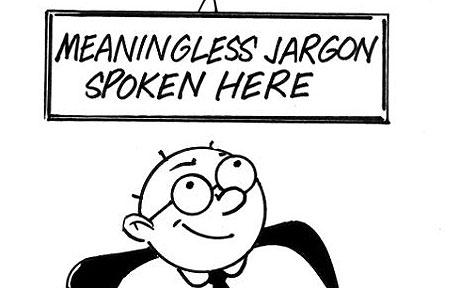
Finally, the other reason why scientific writing is so hard is because scientists do not know how to communicate. They think that bigger is better and they try to persuade people to believe what they claim by using big scientific words that a lot of people can’t understand. English teachers would always say to me, “ the reason we learn vocabulary is to learn a set of words (jargon) that will later be used among professional communities to communicate to a deeper level with less words” or something like that. Now that I am taking Biological Writing and I have learned BIG WORDS like “facilitate, modulate, morphology, utilize, interaction, impact(verb), Et al.” I am told I can’t use them. WTF? Years of learning vocabulary and taking vocabulary quizzes are all meaningless now. The only thing that gives sense to a big part of my education life is gone. I guess I will just deal with it and wander endlessly in agony. At least I try to quit my bad habits of writing long and fancy but a lot of other people just “embrace the suck” and keep on writing ugly scientific papers that not a lot of people can read. What is the point of all the work if no one else can read it? Scientific Jargon destroys the “context” of the papers, oooops I said  a BIG WORD. Yet, the same words are said many times by many scientists and they tend to stick around which makes scientific writing suck.
Therefore, Scientific writing sucks because of three main things: 1) Collecting data is hard and mistakes can be made during the collection of data, 2) Graphics illustrating the scientific principles are inaccurate or misleading and, finally, 3) Because scientists use jargon and fancy writing that not a lot of people can understand rather than simplifying it for the public.

lunes, 17 de octubre de 2011

Why Biology is better than Chemistry (In my opinion)

A few years ago, as a High School student, I faced a difficult decision when asked to decide upon a major to pursue in college. I have always known I wanted to be a Doctor (Ophthalmologist to be exact) but I was not sure about which path to follow. I was actually shocked to find that “Pre-Med” was not a major! How dare! The idea that one could be a Chemist, Biologist, Physicist or even an English major and still become a doctor was confusing at first. Why would I struggle with a hard major when I could take kinesiology (which I learned was a fancy word for Physical Education) or art and still be eligible to apply to medical school?
Fortunately, I had the support and experience of my teachers in High School to give me some advice. I kind of miss the good old days when my teachers actually liked me, now they do not even know my name and that is because I am smart. Foolish College Professors! Going back to my point, I asked my science teachers for advice.
I was hoping choosing a major was a simple task like choosing a shirt, if you like a shirt you buy it and that is it. Nonetheless, choosing a major to pursue was difficult because there are many trade-offs to consider and different things can be learned from different majors, all of which could be useful to learn to become a doctor. I asked Mr. Kowalski, my IB Biology teacher for a suggestion and he obviously said “Biology” but I decided not to take his word for it, as trustworthy as he is, and continue my inquiry. Mrs. Martinez followed, my Chemistry teacher, and she established for the first time the same argument I was deemed to hear over and over again by Professors trying to convince me to change my major. “If you had asked ten years ago, the answer would simply be Biology. However, now with the current studies in Chemistry, I believe Chemistry is most fundamental for people pursuing a medical career.” Darn it! I should have asked ten years ago. Finally, I resorted to a person I believed would be unbiased, Mr. Padgett, my Physics teacher. I was hoping an easy answer “Biology or Chemistry?” but he came altogether with a whole different way of thinking that led him to believe I should be a Physics major. According to him, Biology derives from Chemistry and Chemistry derives from Physics which is why Physics is the most fundamental and important science. However, I did learn some English in high school too and I was able to spot the equivocation in his argument.
Finally, I resorted to the one person who is ALWAYS right, the one person who could solve the puzzle without any bias and thinking only of what is truly best for me, my mother. Mom said the choice was fundamentally mine. She reiterated that she would support me disregarding my decision, but I can’t seem to think of a mother who wouldn’t---  “ha I hate you cause you chose Chemistry over Biology and have decided to exile you from the family!”--- but finally stated that I should disregard what everyone says and do whichever one I really enjoyed the most. She claimed that even if “X” was better than “Y” for instance, and I chose whichever one was better but I did not enjoy it, I would probably do a crappy job because I don’t like it. On the other hand, I would excel at whichever major I really enjoyed.
Therefore, it is evident that Biology is better than Chemistry, in my case. Whether one choice is better than the other is very debatable. However, one can always make the right choice FOR HIM/HER. Make it a great day or not, the choice is yours.  

lunes, 10 de octubre de 2011

My HESTEC experience


“Most of the fundamental ideas of science are essentially simple, and may, as a rule, be expressed in a language comprehensible to everyone,” according to Albert Einstein. Unfortunately, the community believes that scientific works and science itself has to be difficult and, hence, prefer to stay away from it and pursue different careers. Consequently, many Universities and different organizations address this concern informing the public with more accurate information about Science, Technology, Engineering and Mathematics (STEM) professions. The University of Texas- Pan American (UTPA) recognizes the importance of enhancing scientific learning as well as the need for STEM professionals in the Rio Grande Valley (RGV). Therefore, UTPA engage resources in a yearly one week project, the Hispanic Engineering, Science and Technology (HESTEC) week, to inspire and engage students in the STEM related careers, provide for internships and employment for Senior Undergraduate students and to involve the entire community to inform them about the STEM careers. Many events take place during HESTEC week, some more entertaining than others, among these a science symposium that allow many scientists to present the results of their research.
The HESTEC Science Symposium allows many scientists, some from different Universities, to present their research in front of a vast audience that consists of fellow scientists and students. For a great number of scientists, it is a great way to validate their work because otherwise not many would probably read or listen to what they have to report about their research and it also gives students the opportunity to earn some extra points in a few classes or skip class for that day.
Personally, I attended the Symposium for curiosity although a few points for Biochemistry class were also a strong motivation to attend. As soon as I walked in, I recognized many of my previous and current professors who seemed rather excited to observe what I believe are boring presentations. Dr. Zen depicted on the picture on the left, Dr. Fredensborg, Dr. Banik, his afro, and his massive ego all depicted on the second picture, Dr. Bhat, and Dr. Vitek among others were all seating with an anxious look and seemed rather social and normal for the first time. As I walked upstairs, I faced a very important decision. Where to sit? The room was full because Bill Nye “the science guy” was going to talk for about an hour. I glazed around and pondered if any of the professors actually believed students were there to listen to their very important research. Dr. Banik probably was trying to bring afros back, I believe, since his hair seemed particularly messy that day and since he was seating on the first row, I presume to make everyone else in every row behind able to look at his hair. Right behind Dr. Banik, maybe a couple or rows behind, was Dr. Fredensborg and Dr. Zen Faulkes. They were conversing and I learned, for the first time, that professors are rather normal outside of class. Who would have thought professors had friends? Just kidding. I pondered what that conversation could have been about, probably about some sort of parasite inside some sort of crustacean. Soon thereafter, I discovered a few empty seats. One was very close to Banik, who I am obviously not very fond of, and another to a weird guy wearing a transformer costume. I did not do very well in Organic Chemistry class and as soon as I finished that course I promised to try to avoid Dr. Banik. On the other hand, I did not want to be seen and remembered as “the guy seating next to the weird guy in the transformers costume.” What if someone confusingly related us as friends or acquaintances? I have a reputation to withhold, therefore, I preferred to walk all the way to the back of the auditorium and stand, at least until Bill Nye’s presentation was over.
Bill Nye was presented and the crowd was insane. I had never before seen such a massive amount of students cheering and sincerely enjoying his presentation. Bill Nye’s presentation was rather entertaining although not very informational. I learned that I need to “change the world,” something which I already realized, but I believe Bill Nye mistakenly forgot to tell me HOW! However, I still enjoyed his presentation particularly how he allowed the audience to dictate most of his presentation through questions and how readily he was to answer, even the stupid questions.
Bill Nye illustrated how a few skilled people are able to make sciences entertaining. Maybe if professors used a similar approach they could actually “change the world” and enhance STEM career teaching and practice. Very few gifted professors, like Dr. Zen, are able to communicate and teach in this manner. However, I believe that if more people adopted a similar approach more students would be able to learn and pursue a STEM career.

lunes, 3 de octubre de 2011

More About Ethics: Killing a Patient with Kindness Analysis

On Killing Patients with Kindness: An Appeal to Caution Analysis
In On Killing Patients with Kindness: An Appeal to Caution, Alan J. Weisbard and Mark Siegler address the issue arising when non-terminally ill, competent patients demand their “right to die” and illustrate the ideal of “death with dignity” which has drastically increased in recent years. Unlike terminally ill patients or patients in Permanent Vegetative State (PVS), non-terminally ill patients are competent to make decisions about themselves and their immediate well-being. However, what should we do when non-terminally ill patients wish their death and plight not to be forced to “endure the unendurable?” Should such patients be allowed to demand the withdrawal of fluids and nutrition to cause their own death? To what degree is self-autonomy ought to be respected? Weisbard and Siegler further distinguish between withdrawing an air ventilator or dialysis and withdrawing fluids and nutritional supporting tubes. They argue that the human obligation of providing food and drink to those who hunger or thirst is transcendental to the medical environment and, thus, argue that no patient should be deprived of food and water which is deemed “ordinary treatment.” In addition, they also argue that removing feeding tubes would morally corrupt society which would decay into a murderous state which they refer to as the “society of death” because the lack of nutrition itself becomes the direct cause of death as compared to coagulated blood when dialysis is rejected. People with disabilities to which Weisbard and Siegler refer as the “unproductive” have been greatly discriminated throughout history. The “death with dignity” movement was formed to advocate for the rights of the disabled and to fix the deficiencies in the health care system. However, the movement advocating for the right  to die opposes the traditional values of society and proves detrimental for patients rather than helpful. Therefore, Weisbard and Siegler condemn such practices and propose a change in the health care system which could alleviate some of the suffering patients go through rather than hurrying to dispatch them.

lunes, 26 de septiembre de 2011

Biomedical Ethics: Voluntary Active Euthanasia

Voluntary and Active Euthanasia
In Voluntary Active Euthanasia (http://philpapers.org/rec/BROVAE), Dan Brock discusses the controversy surrounding the issue of physician assisted suicide and how is it possible to support it while opposing voluntary active euthanasia and whether there is a moral difference between both of them.  Furthermore, Brock means to enlighten the argument about physician assisted suicide establishing what he believes are the best arguments for both conflicting sides and underlining the moral issues involved in the conflict. For instance, whether euthanasia is unjustified killing and, if so, whether physicians can be convinced to accept the practices despite their opposing moral views.  Brock also argues, in a third section, the cost-benefit ration of adopting voluntary active euthanasia and concludes his argument by favoring a change in policy to adopt physician assisted suicide, obviously with some limitations, to help competent terminally ill patients to end their agony and alleviate their pain.
Brock’s main argument supporting voluntary active euthanasia and physician assisted suicide relies on personal self-determination and autonomy. He believes that competent patients ought to have the freedom to weigh the benefits and burdens of their own life, establish its’ value and decide whether their life is truly worth living. Brock argues that both, physician assisted suicide and voluntary active euthanasia, are very similar to each other although physician assisted suicide is endorsed in recent bioethics and not euthanasia. Typically in physician assisted suicide a patient terminates his or her own life with a lethal dose of a medication provided by the physician. On the other hand, in euthanasia the physician directly applies the lethal dose on the patients, many of which are unable to perform that tasks themselves. The only difference lies on who applies the lethal dose but the final decision is always the patients.’  Thus, the same morals exist in both cases and Brock advocates that both cases rely on the consent of the patient. The choice rests fully in the hands of the patients. Why, then, does the public or legal policy permit one such practice while condemning the other? Why should anyone else deny a patient the right to die with dignity?
On the contrary, the opposition of physician assisted suicide and active euthanasia claim that whether patients’ self-determination and autonomy supports such practices it is nevertheless still ethically immoral and impermissible to allow such practices. In addition, a second argument claims that even when physician assisted suicide or euthanasia is not really morally or ethically wrong, the public and legal policy should never to permit it. Conservative people believe that allowing euthanasia or physician assisted suicide would influence a bleak murderous trend and lead society to morally and ethically decay into a “society of death.” However, if we consider a case of a patient with a terminal case of thyroid gland cancer and all the agony that such patients go through in the terminal state of their lives, wouldn’t it be immoral to force such patients to practically go through hell on earth? Since when is human torture ethical?
 Brock advocates change in current policy to allow voluntary active euthanasia for competent patients. I personally believe that each individual is in charge of their own life and should, therefore, be allowed to decide how to die. “Life, liberty, and the pursuit of happiness” are fundamental rights in American society. Therefore, each individual ought to follow his own autonomy and decide what is in his or her own best interest. Who is more capable to evaluate whether your life is worth living other than yourself?
Finally, Brock concludes his argument by supporting voluntary active euthanasia. Physicians have to be involved in the process, one way or another, but ought to seek only for the best interest of the patient. Ideally, the physicians involvement is necessary and preferable to counter possible social disapproval and because someone has to be accountable and responsible for exercising such authority. Even though the issue seems highly controversial at this time, I believe there will be a time when we, mankind, truly understands one another, including our pain, and sympathize with the practice to alleviate agonizing patients and provide them with a dignifying death. Ancient Greeks always believed that “to die with glory [and dignity], is to live forever” and nowadays people highly regard how they will be remembered upon their deaths. In extreme cases, people have gone as far as launching their bodies to the universe. Why should any of us force others to die without dignity and wander endlessly in agony for days, weeks, sometimes even months or years? Voluntary active euthanasia lends itself to a practical application. Perhaps in the near future, there will be drastic changes to adopt such practice and allow fellow persons do die with dignity and respect, of course as long as the practice of euthanasia is closely monitored and never abused.